
Eating for a healthy heart
What can a healthier diet achieve?
A healthy diet is a great place to start for your heart health and your overall health. We can’t help our genetics, but a healthy diet can help with your weight, blood pressure, cholesterol and your risk of a heart attack and stroke (amongst other things). A healthy diet doesn’t mean being perfect or eating ‘superfoods’ but rather trying to be consistent with your eating habits over the longer term.
How to eat healthily in one paragraph
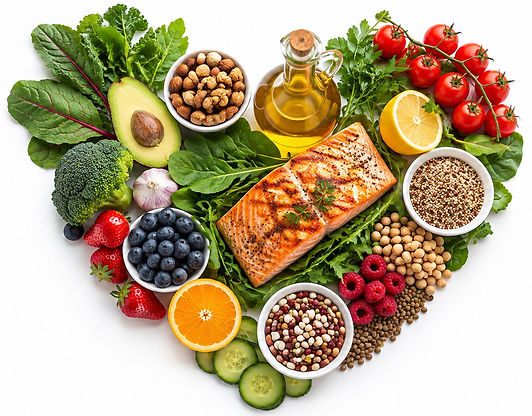
A heart-healthy diet is based mainly on vegetables, fruit, whole grains, legumes, nuts, seeds and fish, with moderate portions of lean poultry, eggs and reduced-fat dairy. Choose minimally processed foods, use healthy fats such as extra-virgin olive or canola oil, and drink water as your main beverage. Limit processed and takeaway foods, refined carbohydrates, sugary drinks, salt, processed meats, butter and foods high in saturated or trans fats. Pay attention to portion sizes and aim for a sustainable Mediterranean-style eating pattern rather than a restrictive short-term diet.
Small changes that make a difference
You do not need to change everything at once. Consider starting with two or three changes:
-
Add an extra vegetable to lunch and dinner.
-
Replace white bread or rice with a wholegrain option.
-
Have a legume-based meal once or twice each week.
-
Replace butter with olive or canola oil.
-
Choose unsalted nuts instead of biscuits or chips.
-
Compare sodium levels when buying packaged food.
-
Cook at home more often and reduce takeaway meals.
A more detailed look
Below is a more detailed look at how to eat for a healthy heart and body. It often helps to discuss your diet with your medical specialists, your GP or a dietitian as well.
Build a balanced plate/keeping calories down
A simple guide for most main meals is:
-
Fill half the plate with vegetables or salad.
-
Fill one-quarter with a healthy protein.
-
Fill one-quarter with a high-fibre carbohydrate or wholegrain.
-
Include a small amount of healthy fat, such as olive oil, avocado, nuts or seeds.
Eating slowly, using a smaller plate and checking serving sizes can help prevent portions gradually becoming larger than you need and help you keep the calories down.
Eat plenty of vegetables and fruit
Vegetables and fruit provide fibre, vitamins, minerals and antioxidants. They also help make meals filling without adding large amounts of energy.
Choose:
-
Fresh or frozen vegetables and fruit.
-
No-added-salt canned vegetables.
-
Canned fruit in water or natural juice.
-
Vegetable-based soups, salads, curries and stir-fries.
-
Whole fruit rather than juice.
Keep cut vegetables ready in the refrigerator and fruit somewhere visible for healthy snacks. Limit vegetables that are deep-fried or served in creamy sauces, and fruit packed in syrup or with added sugar.
Choose wholegrains and high-fibre foods
Wholegrains can help lower cholesterol and provide longer-lasting energy.
Good choices include:
-
Wholegrain or grainy bread.
-
Rolled or steel-cut oats.
-
Brown rice, barley, quinoa and buckwheat.
-
Wholemeal pasta.
-
High-fibre breakfast cereals.
-
Legumes such as lentils, chickpeas and beans.
The whole grain means the three parts of the kernel are kept intact. Refining the grain to make things like white flour removes most of the fibre, iron and B vitamins. Have refined products such as white bread, cakes, pastries, biscuits, doughnuts and many commercial snack foods less often.
Choose healthier proteins
Try to include a range of protein foods rather than relying mainly on red meat.
Choose more often:
-
Beans, lentils, chickpeas and tofu.
-
Nuts and seeds.
-
Fish and seafood—ideally two or three times each week.
-
Eggs.
-
Lean, unprocessed poultry.
-
Unflavoured milk and yoghurt.
If eating red meat, choose lean cuts and consider limiting it to one to three meals per week. Processed meats such as bacon, sausages, salami and many deli meats are best kept to a minimum because they are often high in salt and saturated fat.
Replace saturated fats with healthy fats
The type of fat matters more than simply trying to remove all fat from your diet.
Choose:
-
Extra-virgin olive oil or canola oil.
-
Nuts and seeds.
-
Avocado and olives.
-
Oily fish such as salmon, sardines and trout.
-
Nut butters without added salt or sugar.
Limit:
-
Butter, lard and ghee.
-
Fatty and processed meats.
-
Poultry skin.
-
Cream and cream-based sauces.
-
Coconut and palm oils.
-
Deep-fried foods.
-
Cakes, pastries and foods containing hydrogenated oils.
Replacing saturated and trans fats with unsaturated fats can improve LDL cholesterol. Simply replacing fat with refined carbohydrates or added sugar does not provide the same benefit. People with established heart disease or high LDL cholesterol may benefit from reduced-fat dairy choices.
Reduce salt
Too much salt can raise blood pressure. The Australian Heart Foundation recommends no more than approximately 5 grams of salt per day, equivalent to about 2,000 mg of sodium or one teaspoon of salt from all sources—not one extra teaspoon added to food.
Most dietary salt comes from packaged and processed foods rather than the salt shaker. Common sources include:
-
Processed meats.
-
Takeaway and fast foods.
-
Sauces, gravies, stock powders and seasoning mixes.
-
Ready-made meals and soups.
-
Salty snacks.
-
Some breads, cereals and cheeses.
Compare similar products using the sodium per 100 g column on the nutrition panel. Choose “no added salt”, “low salt” or reduced-salt products where practical. Flavour food with herbs, spices, garlic, ginger, chilli, lemon, lime or vinegar.
Potassium-containing salt substitutes are not suitable for everyone, particularly people with kidney disease or those taking certain heart or blood-pressure medicines. Check with your doctor or pharmacist before using one.
Eat fewer ultra-processed foods and added sugars
Try to limit foods that are high in salt, added sugar, saturated fat or refined carbohydrates, including:
-
Sugary drinks, energy drinks and cordials.
-
Lollies and chocolate.
-
Cakes, biscuits and pastries.
-
Chips and many packaged snack foods.
-
Fast food and highly processed ready meals.
These foods do not have to be completely forbidden. Aim to make them ‘sometimes foods’ eaten in smaller amounts rather than everyday choices.
Make water your usual drink
Water is the best everyday drink. Tea and coffee can usually be included without added sugar, although some people with palpitations may need to reduce caffeine.
Alcohol is not recommended as a way to protect the heart. If you do not drink, there is no cardiovascular reason to start. If you choose to drink, Australian guidance recommends no more than 10 standard drinks per week and no more than four on any one day. Less is better!
Eating to lower your cholesterol
High cholesterol is often a combination of your genetics and your lifestyle. Healthy eating and exercise/weight loss will have a good effect on your cholesterol but medications may also be needed for patients at a higher risk of heart disease.
The most effective diet for lowering LDL cholesterol (bad cholesterol) combines a Mediterranean-style diet with foods that actively reduce cholesterol. Replace saturated fats—such as butter, fatty and processed meats, coconut oil, pastries and full-fat dairy—with unsaturated fats from extra-virgin olive oil, avocado, nuts, seeds and fish. Increase soluble fibre by eating oats, barley, beans, lentils, chickpeas, fruit and vegetables, and choose whole grains instead of refined carbohydrates. Soy foods and products enriched with plant sterols can provide an additional LDL-lowering effect.
References
-
National Heart Foundation of Australia. How to follow a heart-healthy eating pattern. Updated 2026.
-
Australian Government. Australian Dietary Guidelines.
-
Estruch R, Ros E, Salas-Salvadó J, et al. Primary prevention of cardiovascular disease with a Mediterranean diet supplemented with extra-virgin olive oil or nuts. N Engl J Med. 2018;378. doi: 10.1056/NEJMoa1800389.
-
Lichtenstein AH, Appel LJ, Vadiveloo M, et al. 2021 dietary guidance to improve cardiovascular health: a scientific statement from the American Heart Association. Circulation. 2021;144–e487. doi: 10.1161/CIR.0000000000001031.
-
National Heart Foundation of Australia. Salt and heart health. Reviewed 2025.
-
National Health and Medical Research Council. Australian guidelines to reduce health risks from drinking alcohol. 2020.